DESCRIPTION
An airport is a complex system of interdependent businesses: airlines bring the flights, passengers bring the revenue in shops, restaurants and car parks, and every bottleneck – at check-in, at security or at the border – hits satisfaction and earnings at the same time. Anyone in a leadership role at an airport – whether in operations, commercial, marketing, HR or finance – needs to understand how these business units interact. Our Airport Simulation provides an immersive, risk-free environment to do exactly that: participants take over an international airport and experience first-hand how their decisions affect passenger numbers, revenue, margins and cash flow.
The simulation combines business acumen with enterprise thinking across functional boundaries. How do we attract more flights and passengers? How do we price aviation, handling, retail space and parking? Which infrastructure and technology investments really pay off? How do we keep passengers satisfied and employees engaged? Like every IndustryMasters business simulation, it is available as a competitive multi-player real-time event and as a self-guided single-player version.
The Airport Simulation can be tailored quickly to align the storyline, business units, KPIs, critical decisions and relevant lessons with your company and your airport. When only a custom solution will do, we have the experience and technology to build completely unique simulations. We work with you to ensure we have exactly the decisions and outcomes your learners need to understand.
THE AIRPORT BUSINESS MODEL
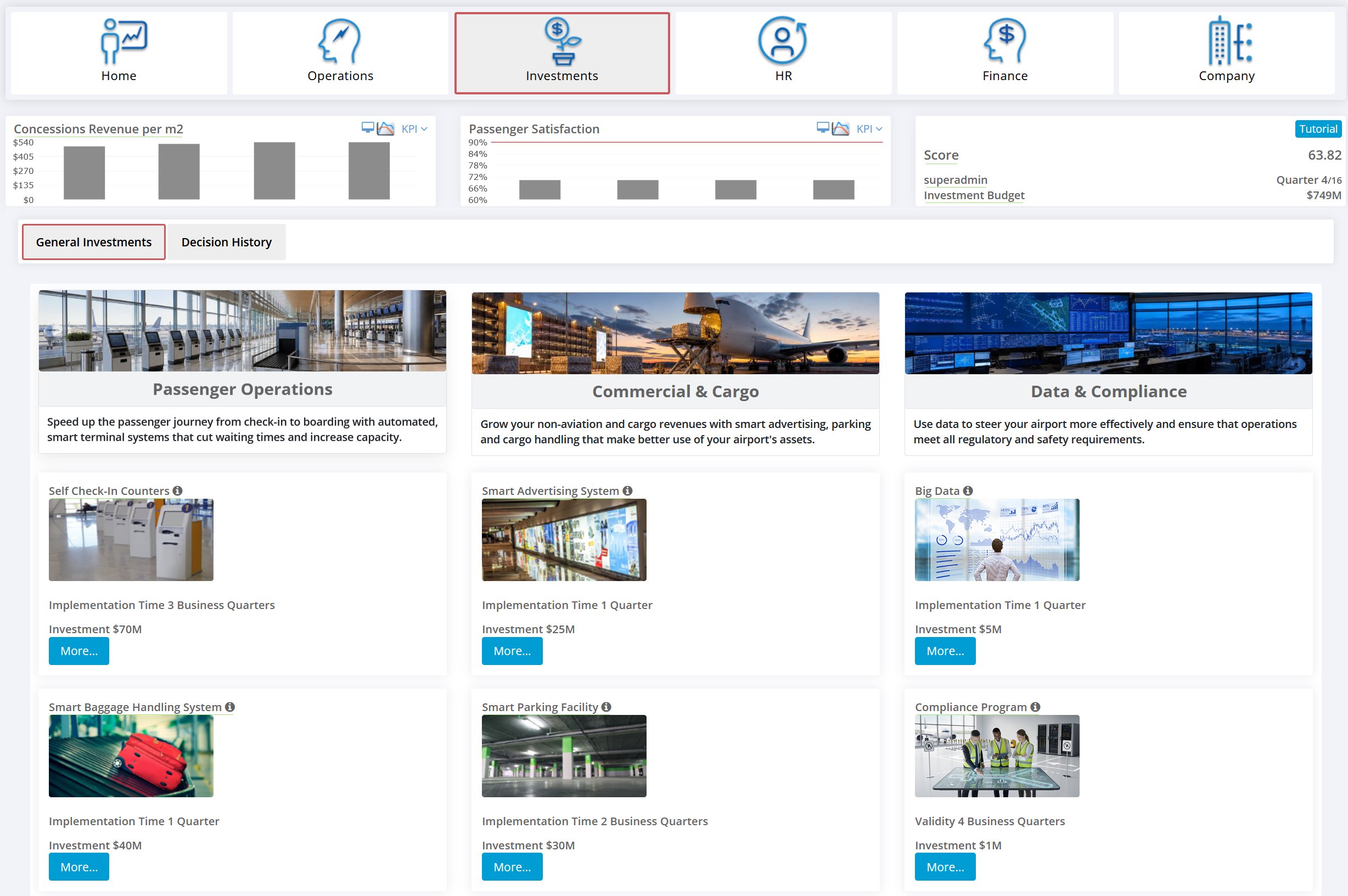
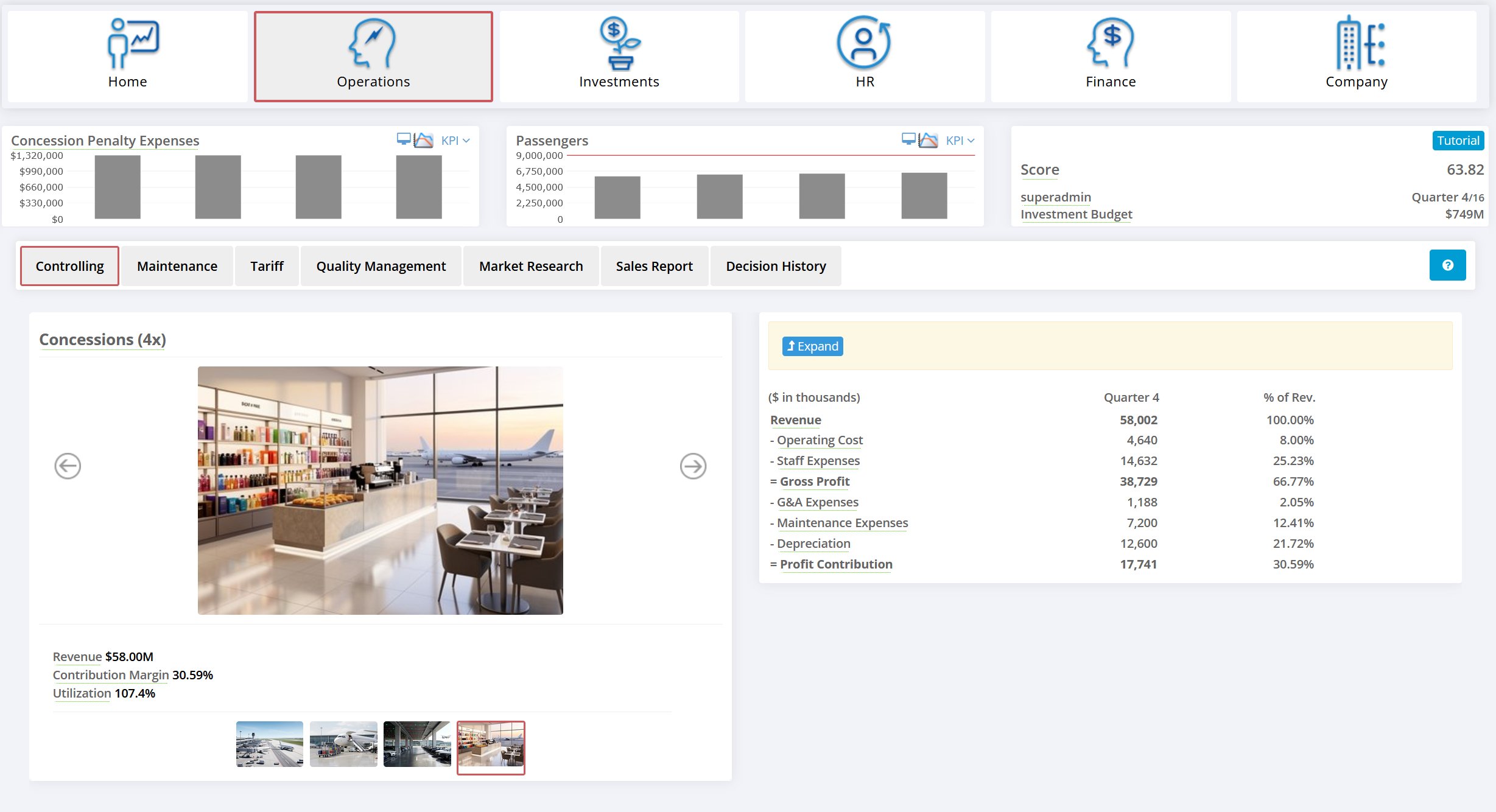
Participants manage an international airport with four business units – aviation, ground handling, concessions and parking – and compete against other airports for airlines and passengers. They set prices and marketing budgets for each business unit, manage capacity and staff, and invest in systems such as smart baggage handling, self check-in, gate management, smart parking and big data.
Along the way, they experience the typical trade-offs of the industry: high infrastructure investments versus budget limits, aviation charges versus non-aviation revenue, and efficiency versus passenger experience. Real-world challenges such as AI in passenger processing, drone threats to airspace security and the EU Entry/Exit System at the border put their decisions to the test.
Topics
- Airport business model and value chain
- Aviation and non-aviation revenue streams
- Pricing and marketing per business unit
- Capacity planning and operations
- Passenger experience and satisfaction
- Digitalization and AI in airport processes
- Security and crisis management
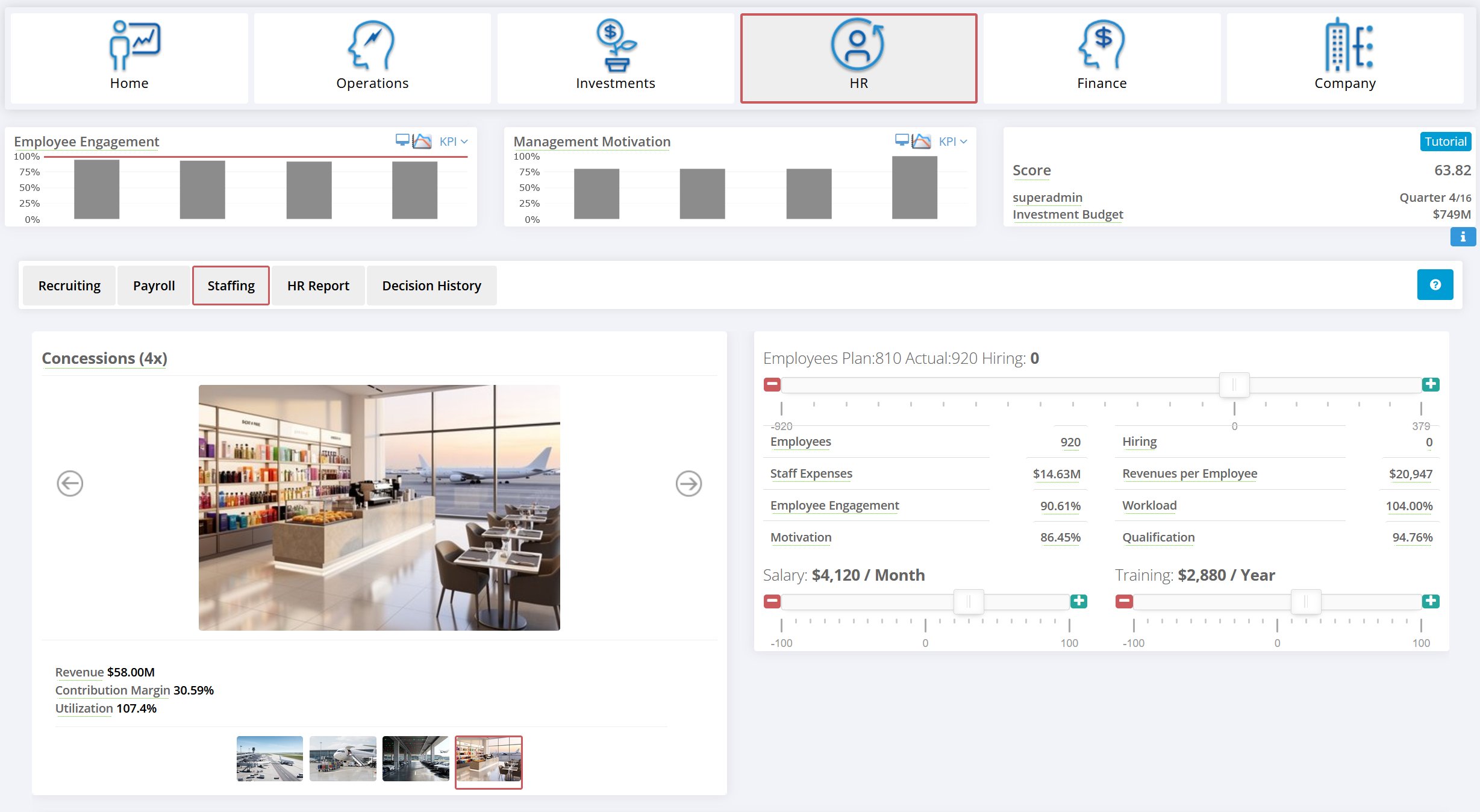
- HR management — engagement & motivation
- Investment decisions and budget management
- Finance — earnings, cash flow & returns
Key Performance Indicators (KPIs)
- Passengers
- Flights
- Concessions Revenue per m²
- Retail Spend per Passenger
- Passenger Satisfaction
- EBIT Margin
- Net Income
- Free Cash Flow (FCF)
- Concession Penalty Expenses
- Employee Engagement
- Management Motivation
Learning Objectives
- Understand how an airport creates value and generates revenue
- Portfolio of business units
- Aviation and ground handling vs. concessions and parking
- How passenger volume drives non-aviation revenue
- Product management
- Adjusting prices
- Adjusting marketing budgets
- Investments along the value chain
- Operations: smart baggage handling, self check-in, gate management and smart cargo
- Commercial: smart advertising and smart parking
- Data and governance: big data and compliance
- Management issues: AI, airspace security and border processes
- Aligning capacity and staffing with demand
- Balancing trade-offs: short-term results vs. long-term growth
- Understand the importance of talent management and employee engagement
- Think and act as an entrepreneur across functional boundaries