DESCRIPTION
In consumer products, margins are thin, shelf space is contested and brands take years to build but can lose relevance in a single season. Retailers expect promotions and on-time, in-full delivery, raw material supply is volatile, and consumers increasingly demand healthy, sustainable and fairly traded products. Anyone in a leadership role at a consumer goods company – whether in marketing, sales, operations, HR or finance – needs to understand how price, brand, capacity and people interact. Our Consumer Products Simulation provides an immersive, risk-free environment to do exactly that: participants take over a chocolate manufacturer and experience first-hand how their decisions affect market share, profit and the value of the company.
The simulation combines business acumen with enterprise thinking across functional boundaries. Which segments do we serve – Generic, Standard, Premium, Healthy or Luxury? Which prices and marketing budgets win the shelf profitably? Where do we invest along the value chain – factory, warehouse, sales force or sustainability? How do we keep our people engaged and build the leaders of tomorrow? Like every IndustryMasters business simulation, it is available as a competitive multi-player real-time event and as a self-guided single-player version.
The Consumer Products Simulation can be tailored quickly to align the storyline, product portfolio, KPIs, critical decisions and relevant lessons with your company and your markets. When only a custom solution will do, we have the experience and technology to build completely unique simulations. We work with you to ensure we have exactly the decisions and outcomes your learners need to understand.
THE CONSUMER PRODUCTS BUSINESS MODEL
Participants start with an established portfolio of three chocolate brands – a high-volume Generic line, a Standard line and a Premium line – produced in their own factory and sold through retail channels. Quarter by quarter, they set prices and marketing budgets per product, decide on new product launches into the Healthy and Luxury segments, and invest in manufacturing, warehousing, sales and their workforce.
Along the way, they experience the typical trade-offs of the industry: volume products that fill the factory versus premium products that carry the margin, marketing spend that builds the brand today but pays off only tomorrow, capacity that must keep pace with demand without tying up too much capital, and real-world challenges such as a new product launch, fair trade pressure, supply chain disruptions and talent shortages.
Topics
- Consumer goods business model and value creation
- Product portfolio management across price segments
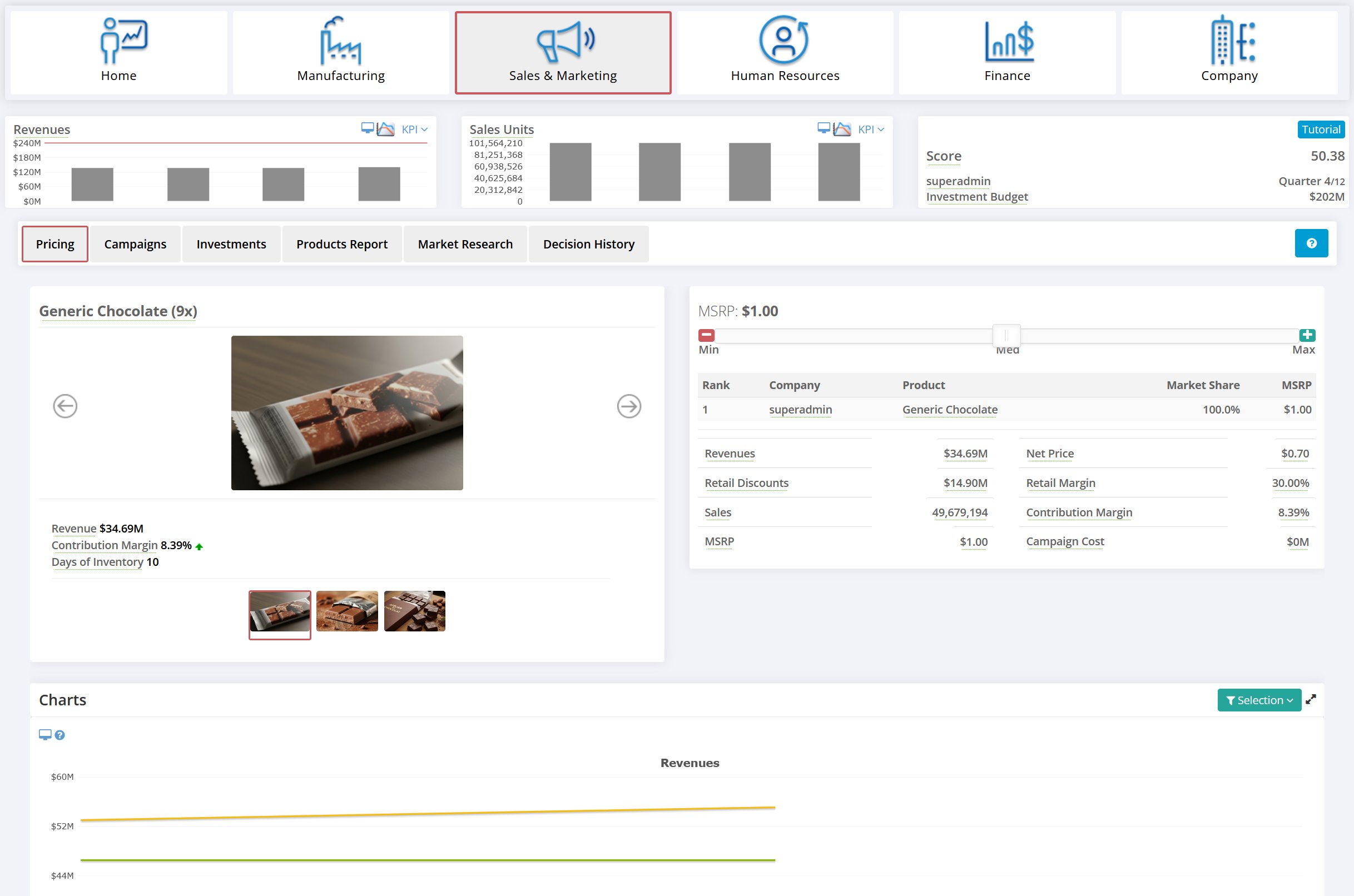
- Pricing, promotion and brand building
- New product development and launch
- Retail relationships and sales force effectiveness
- Manufacturing — process optimization, maintenance & Smart Factory
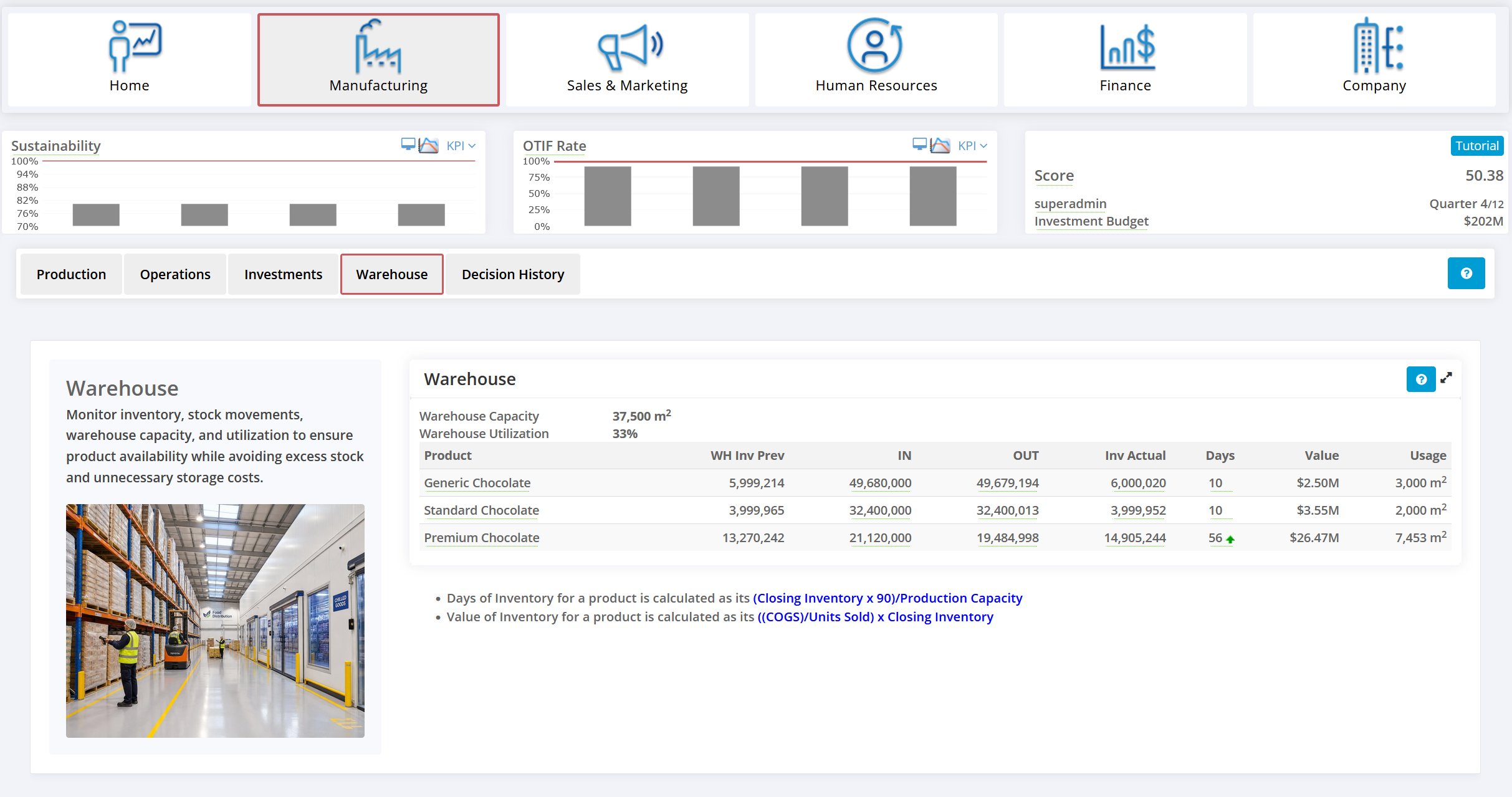
- Warehousing, logistics & on-time-in-full delivery
- HR management — engagement, training & leadership development
- Sustainability — packaging, water, CO2 & fair trade
- Crisis management — supply chain risk and talent flow
Key Performance Indicators (KPIs)
- Revenues
- EBIT Margin
- Net Income
- Return on Invested Capital (ROIC)
- Market Share
- Sales Units
- Customer Satisfaction
- OTIF Rate (On Time In Full)
- Staff Engagement
- CO2 Emissions
- Sustainability
Learning Objectives
- Understand how a consumer products company creates value and generates revenue
- Portfolio decisions
- Volume vs. premium – balancing segments and margins
- Timing and choice of new product launches
- Product management
- Adjusting prices
- Adjusting marketing budgets and brand investments
- Investments along the value chain
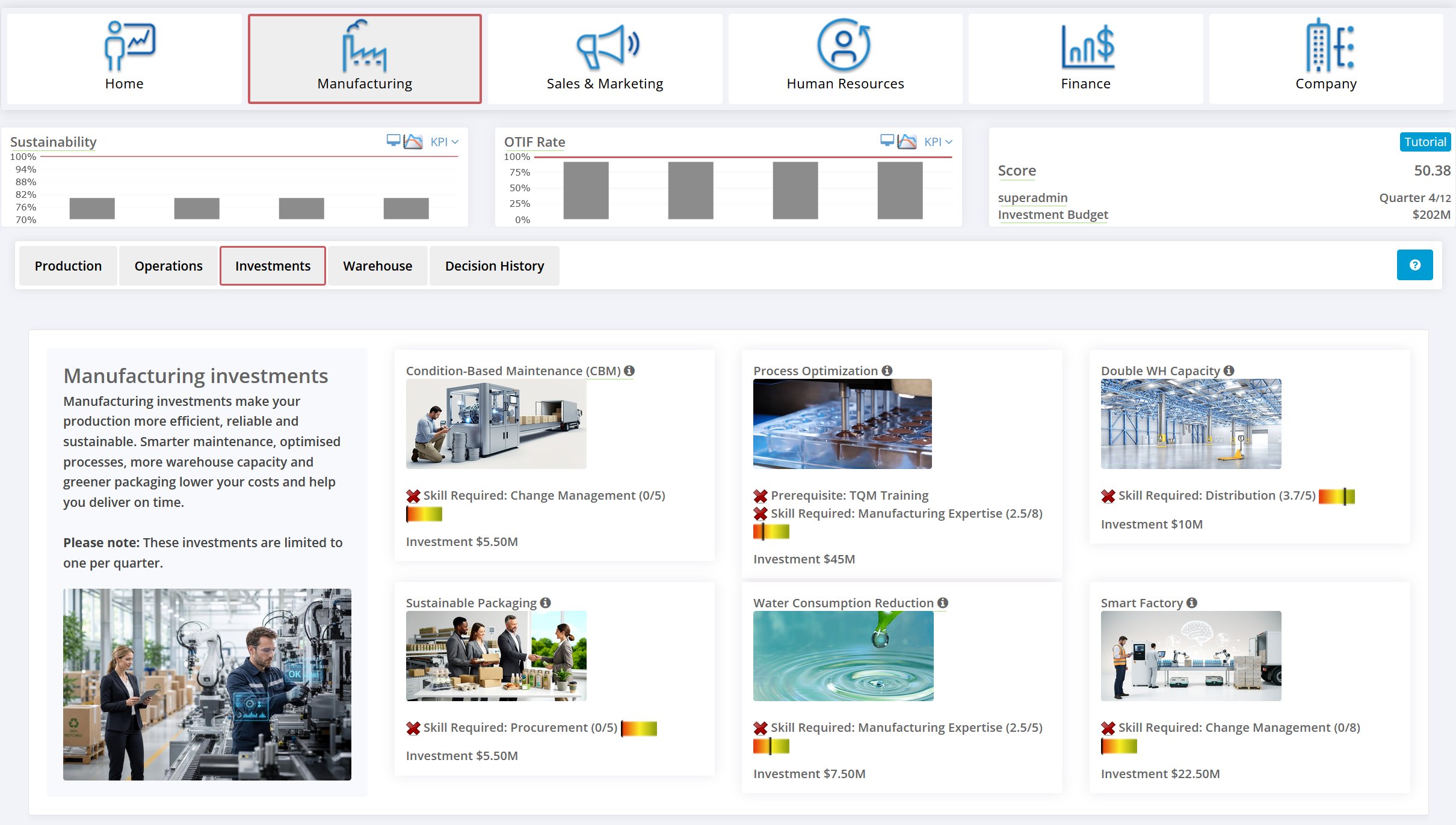
- Manufacturing: process optimization, condition-based maintenance, Smart Factory and warehouse capacity
- Sales & Marketing: store relations, celebrity endorsement and predictive sales analytics
- HR: employee relations, merchandising and TQM training, leadership development
- Sustainability: sustainable packaging, water consumption reduction and fair trade sourcing
- Aligning capacity and staffing with demand
- Balancing trade-offs: short-term results vs. long-term growth
- Understand the importance of talent management and employee retention
- Think and act as an entrepreneur across functional boundaries