DESCRIPTION
In the pharmaceutical business, today's revenue is the result of decisions often made many years earlier. Anyone in a leadership role at a healthcare company – whether in research, manufacturing, marketing, HR or finance – needs to understand how these decisions interact along the entire value chain. Our Healthcare Simulation provides an immersive, risk-free environment to do exactly that: participants take over a research-driven pharmaceutical company and experience first-hand how their decisions affect revenue, margins and cash flow.
The simulation combines business acumen with enterprise thinking across functional boundaries. Which medicines do we bring to market? How much manufacturing capacity do we need for biologics? How do we secure prices and reimbursement with payers? How do we attract and retain the right talent? Like every IndustryMasters business simulation, it is available as a competitive multi-player real-time event and as a self-guided single-player version.
The Healthcare Simulation can be tailored quickly to align the storyline, product portfolio, KPIs, critical decisions and relevant lessons with your company and your therapeutic areas. When only a custom solution will do, we have the experience and technology to build completely unique simulations. We work with you to ensure we have exactly the decisions and outcomes your learners need to understand.
THE PHARMA BUSINESS MODEL
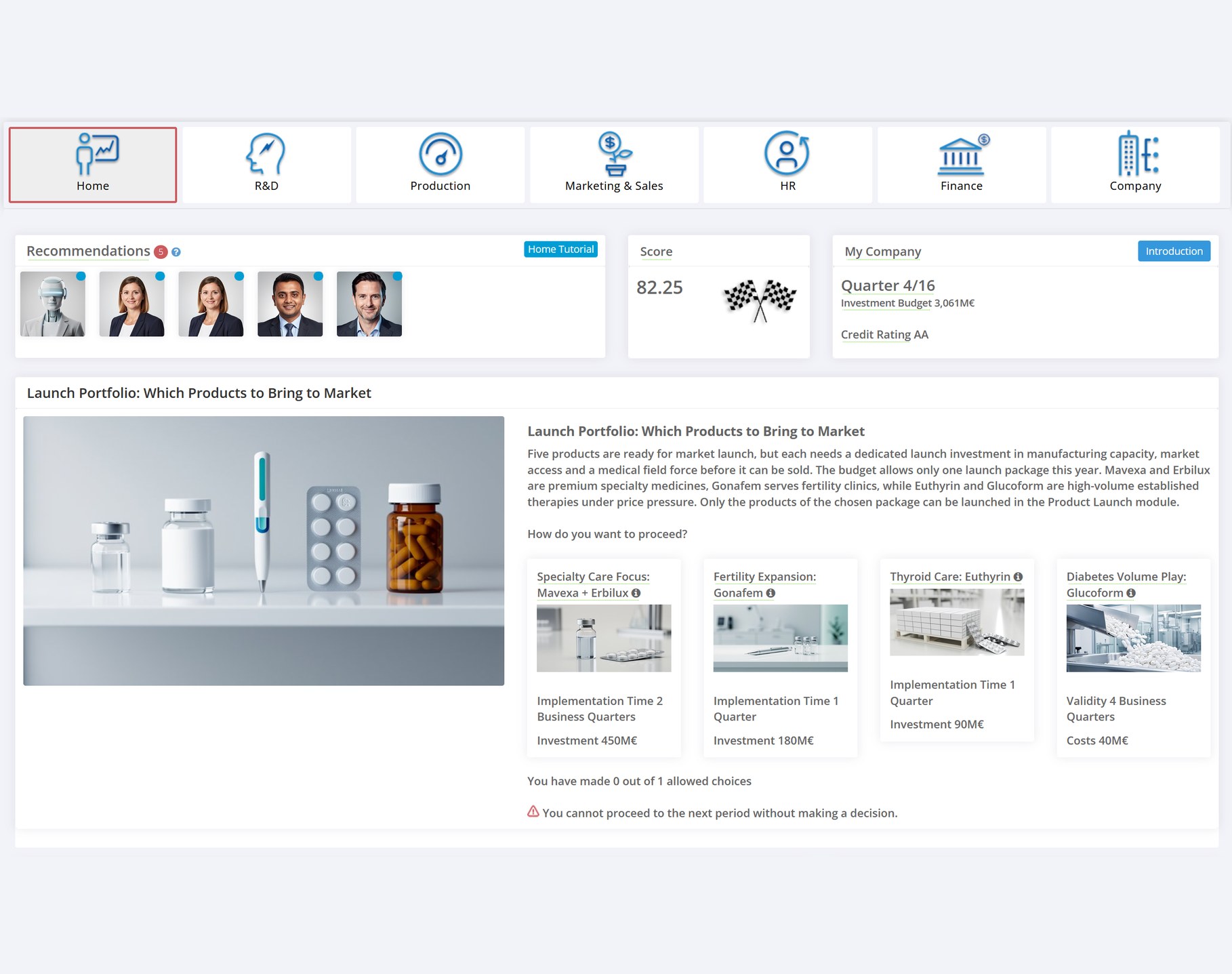
Participants manage a portfolio of prescription medicines in oncology, neurology, fertility and cardiometabolic care – from high-priced specialty therapies to established high-volume products under price pressure. They decide which products to bring to market and invest strategically in R&D, manufacturing, marketing and people.
Along the way, they experience the typical trade-offs of the industry: high up-front investments and long lead times, the risk and return of different products, price pressure from payers, and the question of how innovation turns into sustainable growth.
Topics
- Pharma business model and value chain
- Portfolio and launch decisions
- Research & development, partnerships and alliances
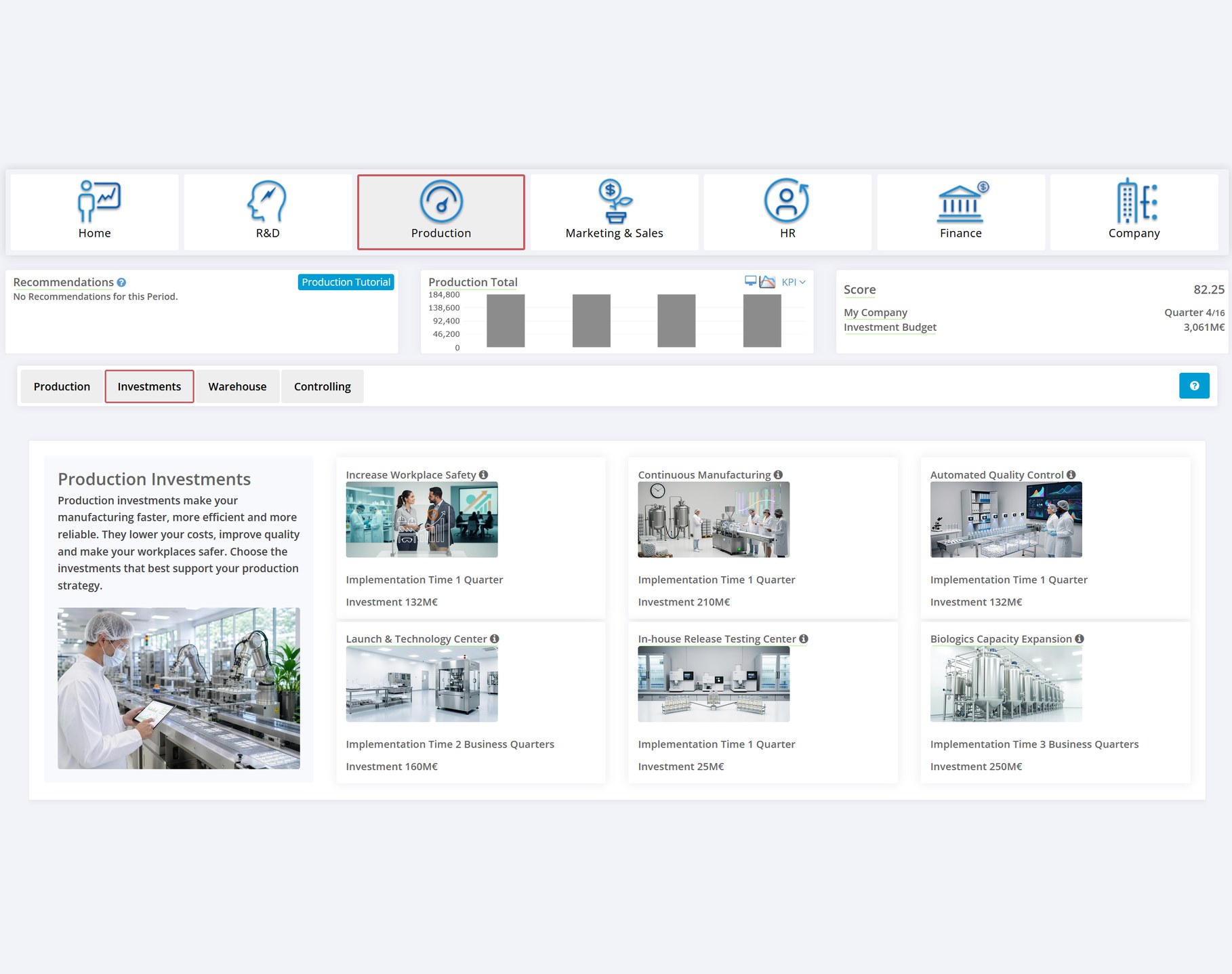
- Manufacturing and capacity planning, including biologics
- Market access, pricing and reimbursement
- Marketing and field force
- HR management — recruiting, retention & motivation
- Investment decisions and budget management
- Finance — earnings, cash flow & returns
- CO₂ emissions & sustainability
Key Performance Indicators (KPIs)
- Revenue
- EBITDA Margin
- EBIT Margin
- Net Income
- Return on Assets (ROA)
- Return on Invested Capital (ROIC)
- Sales Volume
- Production Volume
- Days of Inventory
- Product Age
- CO₂ per 1M Product Value
- Staff Engagement
- Staff Attrition
Learning Objectives
- Understand how a pharmaceutical company creates value and generates revenue
- Portfolio and launch decisions
- Specialty therapies vs. high-volume products
- Launch investments and time-to-market
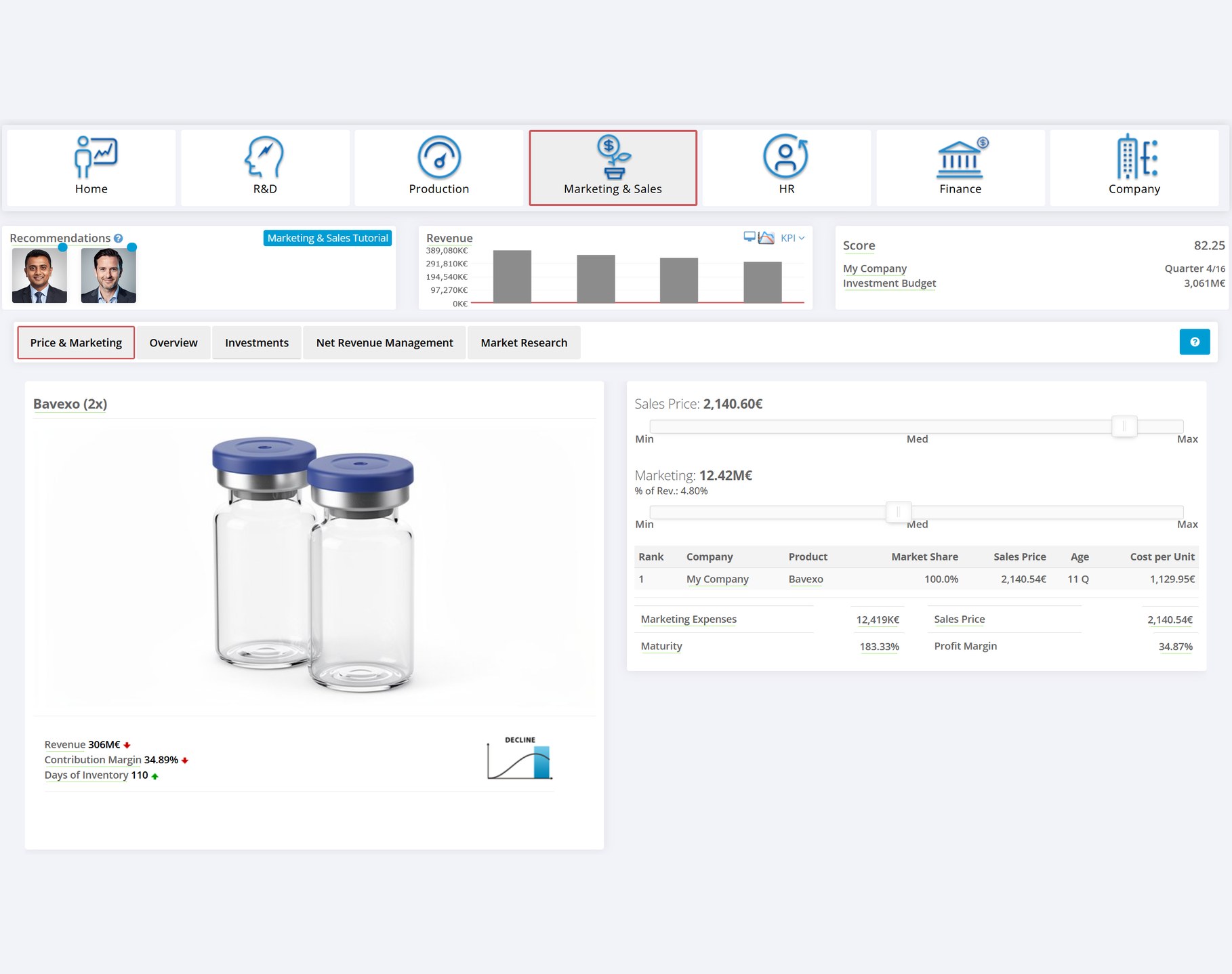
- Product management
- Adjusting prices
- Adjusting marketing budgets
- Investments along the value chain
- R&D: research alliances and biotech partnerships
- Manufacturing: capacity, quality and batch release
- Marketing: field force, patient access and market access
- HR: upskilling, talent retention and flexible work models
- Aligning production and staffing with demand
- Balancing trade-offs: short-term results vs. long-term growth
- Understand the importance of talent management and employee retention
- Think and act as an entrepreneur across functional boundaries