DESCRIPTION
In the hotel business, every room that stays empty tonight is revenue lost for good – and every new hotel ties up capital for decades. Anyone in a leadership role at a hotel company – whether in operations, sales and marketing, HR or finance – needs to understand how occupancy, room rates, staffing and investments interact. Our Hotel Simulation provides an immersive, risk-free environment to do exactly that: participants take over an international hotel group at the start of an expansion phase and experience first-hand how their decisions affect occupancy, RevPAR, profit and the value of the company.
The simulation combines business acumen with enterprise thinking across functional boundaries. In which hotel category do we grow – City Budget, Business, Luxury or Spa? Where and how large do we build? Which room rates and marketing budgets fill our rooms profitably? How do we attract and keep good staff in a tight labour market? Like every IndustryMasters business simulation, it is available as a competitive multi-player real-time event and as a self-guided single-player version.
The Hotel Simulation can be tailored quickly to align the storyline, hotel portfolio, KPIs, critical decisions and relevant lessons with your company and your markets. When only a custom solution will do, we have the experience and technology to build completely unique simulations. We work with you to ensure we have exactly the decisions and outcomes your learners need to understand.
THE HOTEL BUSINESS MODEL
Participants start with two City Budget hotels – one established 200-room property in an A-location and one just opening in a B-location. Funded by mortgages, they expand into new hotels of 50 to 150 rooms in the City Budget, Business, Luxury and Spa categories, and decide whether to concentrate on one category or diversify across tourist and business demand.
Along the way, they experience the typical trade-offs of the industry: high fixed costs and capital tied up in property, the balance between room rate and occupancy, rising labour costs and staff shortages, and real-world challenges such as energy costs, cyberattacks and changing guest expectations. Success is measured by the market capitalization of the hotel group.
Topics
- Hotel business model and value creation
- Portfolio and expansion decisions – category, size and location
- Pricing, revenue management and occupancy
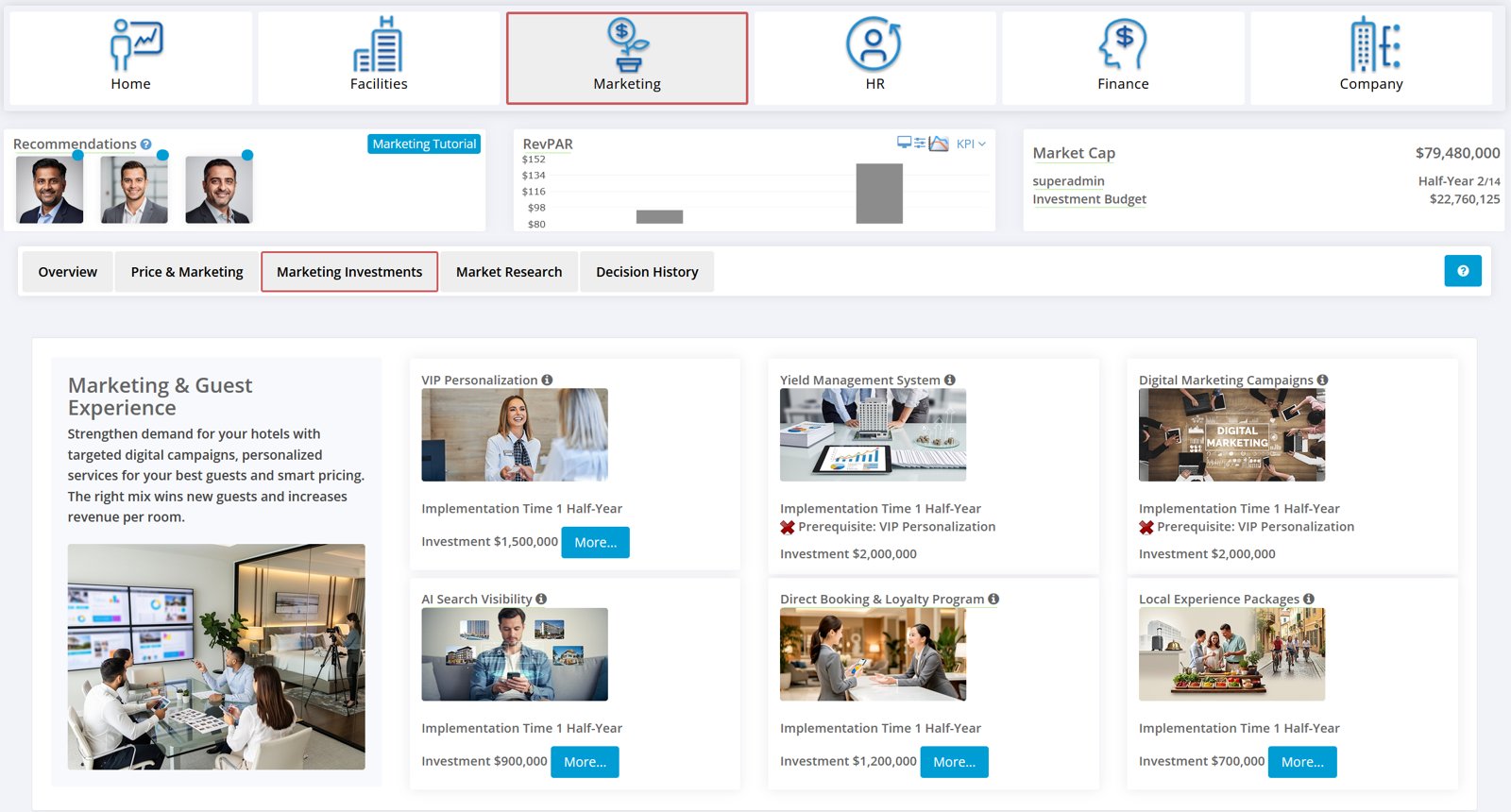
- Marketing, guest experience and direct booking
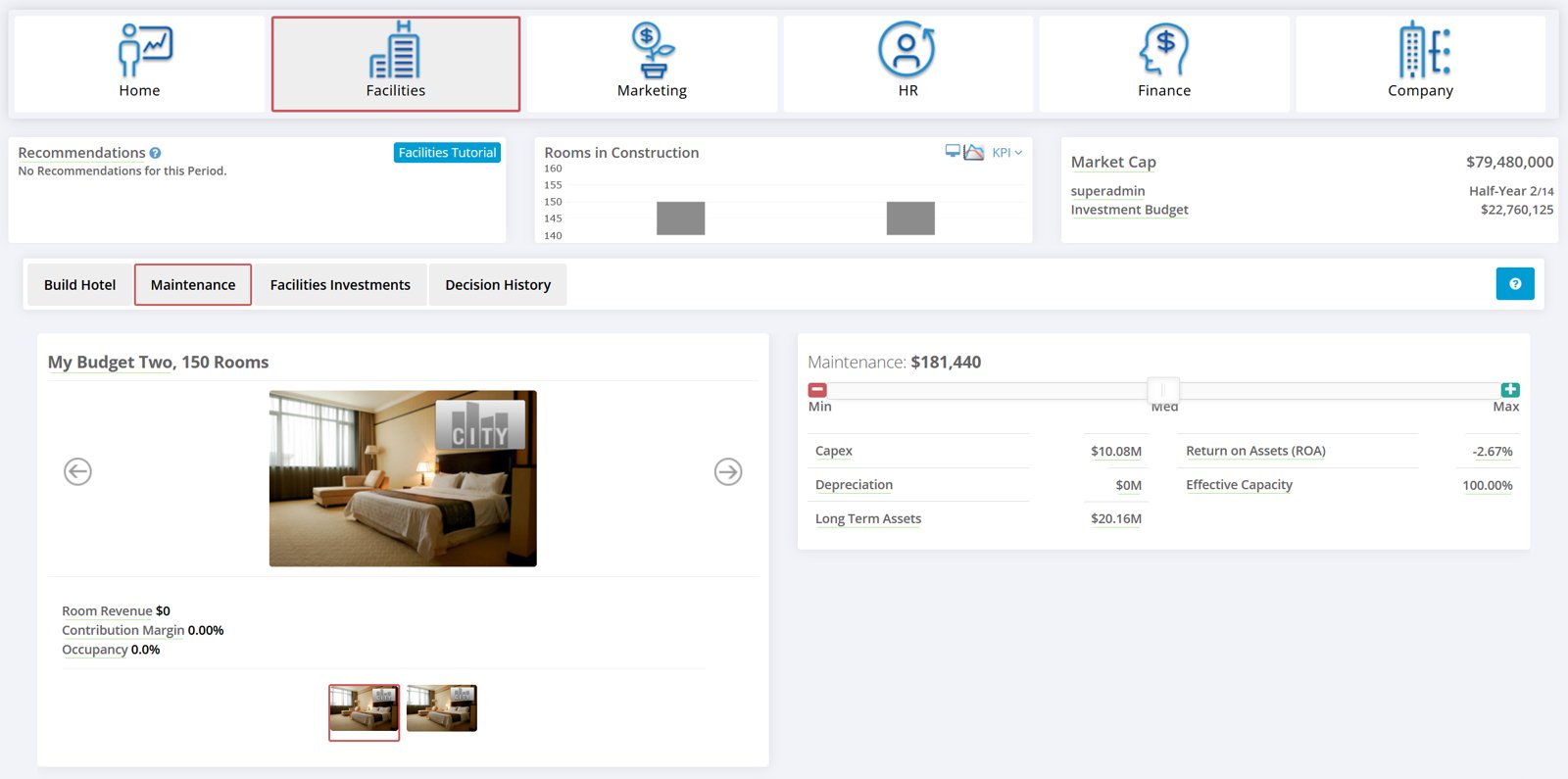
- Facilities, maintenance and technology investments
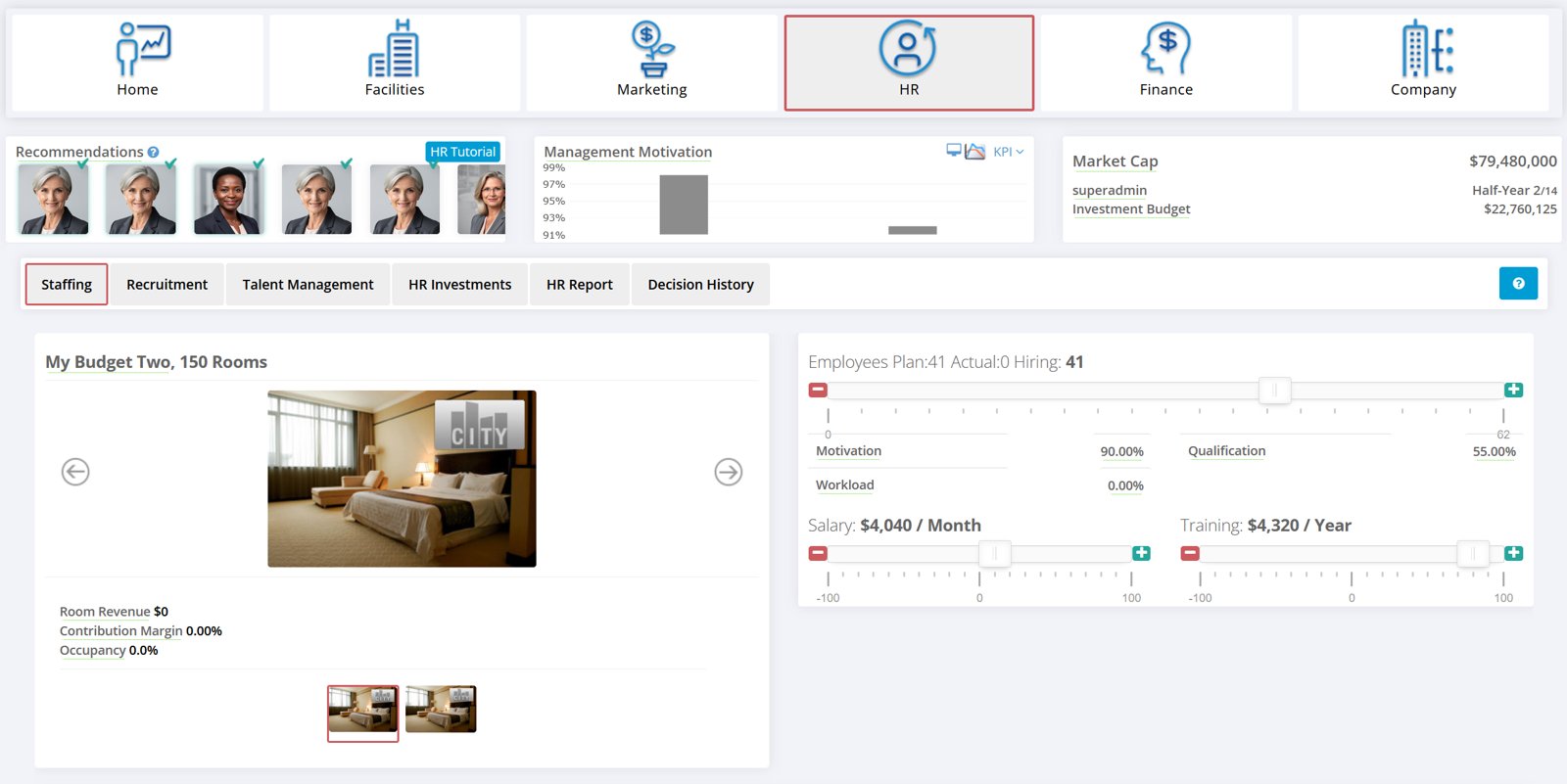
- HR management — recruiting, training, retention & motivation
- Investment decisions and budget management
- Finance — mortgages, equity, cash flow & returns
- Energy & sustainability
- Crisis management — staff shortage and cyber security
Key Performance Indicators (KPIs)
- Occupancy
- Revenues
- Average Room Rate
- RevPAR (Revenue per Available Room)
- GOPPAR (Gross Operating Profit per Available Room)
- Gross Operating Profit
- Return on Equity (ROE)
- Free Cash Flow
- Staff Expenses
- Staff Engagement
- Management Motivation
- Rooms in Operation & Rooms in Construction
- Guest Nights
Learning Objectives
- Understand how a hotel group creates value and generates revenue
- Portfolio and expansion decisions
- Concentration vs. diversification across hotel categories
- Size, location and timing of new hotels
- Revenue management
- Adjusting room rates
- Adjusting marketing budgets
- Investments along the value chain
- Facilities: maintenance, smart technology, energy efficiency and wellness
- Marketing: personalization, yield management, AI search visibility and direct booking
- HR: training, AI upskilling, cross-training and staff retention
- Aligning staffing with occupancy and demand
- Balancing trade-offs: short-term results vs. long-term growth
- Understand the importance of talent management and employee retention
- Think and act as an entrepreneur across functional boundaries